
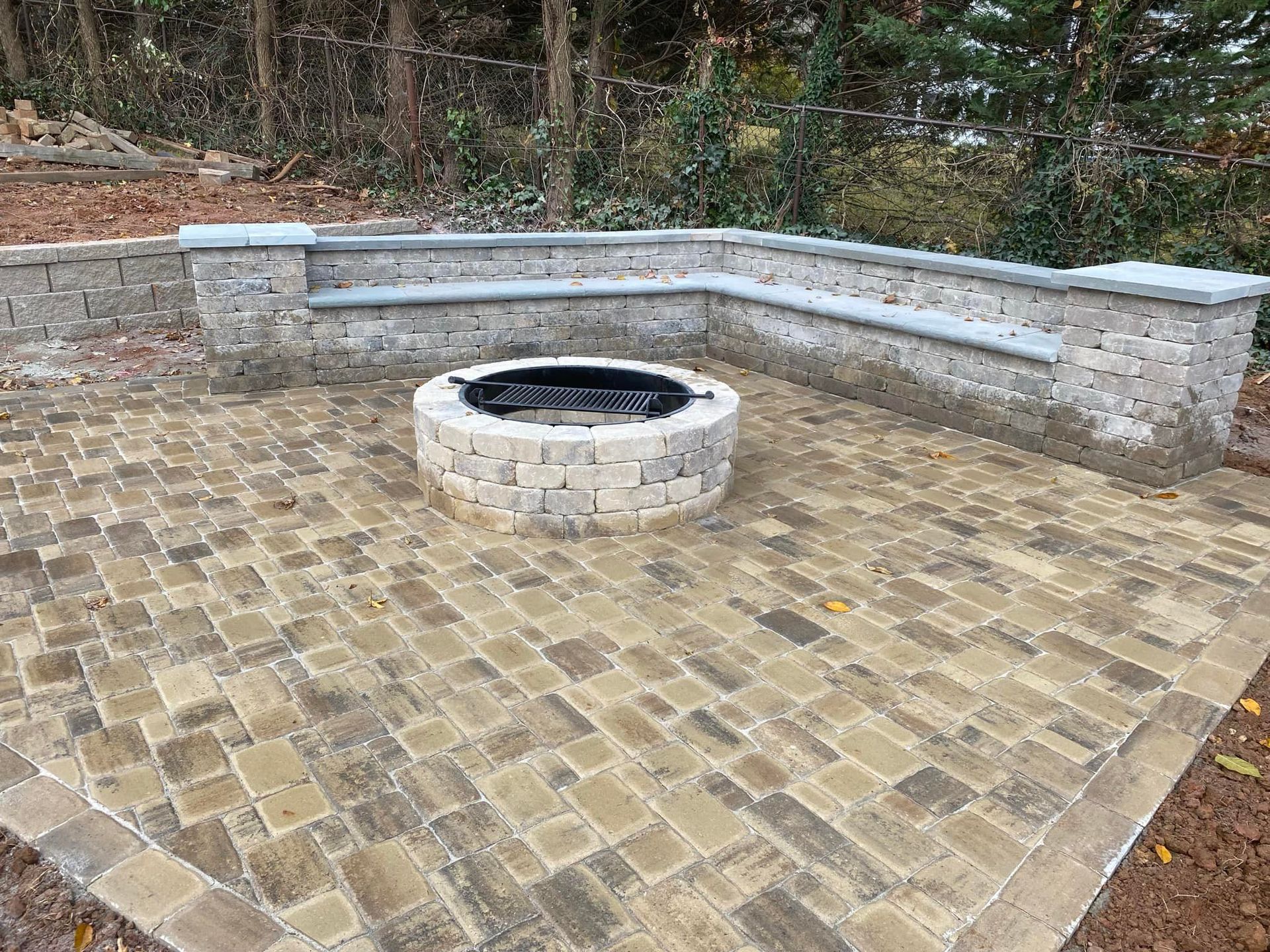
Outdoor Spaces Built Around Comfortable Gathering
Outdoor Fire Pits and Sitting Walls in Canton for properties needing functional seating and year-round outdoor gathering areas
AC Hardscape & Designs builds outdoor fire pits and sitting walls in Canton using quality stone and masonry techniques designed for durability and long-term use. These features create a central gathering space you can use year-round while adding functional seating that integrates with your existing hardscape. Custom shapes and styles are designed to match surrounding patios, walkways, and outdoor living areas, with spacing and materials selected for both safety and visual cohesion.
Fire pits anchor outdoor living spaces by providing warmth and a natural focal point, while sitting walls define seating zones without requiring furniture that shifts or degrades from weather exposure. Proper construction involves selecting stone that withstands thermal expansion from direct flame contact, ensuring adequate airflow beneath fire pit bases, and building sitting walls at comfortable seating height with capstones that shed water and resist surface cracking. In areas with clay-heavy soils common to this region, stable base preparation prevents settling that would compromise wall alignment or create gaps around fire pit perimeters.
Schedule a property consultation to review layout options and material selections for your outdoor space.
What Proper Fire Pit and Sitting Wall Installation Requires
Construction begins with excavating to stable soil and building a compacted gravel base that supports the weight of masonry materials while allowing drainage beneath the structure. Stone is laid with full mortar joints that lock each course together, preventing individual stones from shifting under use or freeze-thaw cycles. Fire pit interiors are built with firebrick or heat-rated stone, and metal fire rings are seated securely to contain flames and protect surrounding masonry from direct heat damage.
Once completed, you see clearly defined seating areas with level, stable surfaces that remain dry after rain and maintain their position through seasonal ground movement. Fire pits light easily and burn evenly without smoke blowing unpredictably due to proper depth and ventilation design. Sitting walls provide consistent seating height around the entire perimeter, and capstones stay secure without rocking or displacing when weight is applied. These installations require no ongoing adjustment or repositioning, unlike portable fire bowls or freestanding benches.
Sitting wall height, fire pit diameter, and material color are all adjustable based on your space and preferences. Walls can incorporate curves, corners, or tiered levels to follow existing grade changes, and fire pits can be designed as wood-burning or configured for gas line connection. Stone selection ranges from natural fieldstone to cut pavers, allowing the finished features to either contrast with or complement surrounding hardscape materials.
Fire pits and sitting walls are common additions to patios and outdoor living areas, and these questions address planning, installation, and long-term use considerations.
What Property Owners Usually Ask
What distance should a fire pit maintain from sitting walls and other structures?
Fire pits are positioned with adequate clearance from seating areas to prevent heat discomfort, typically allowing at least three to four feet of open space, and are located away from overhead branches, roof eaves, and property lines to meet local fire safety standards.
How are sitting walls built to stay level on sloped ground?
Sitting walls are stepped in sections or built with footings that follow grade changes, ensuring each seating surface remains level and structurally stable even when the surrounding yard slopes, which is common in properties throughout Canton and surrounding areas.
What type of stone works best for fire pit surrounds?
Stone used around fire pits must tolerate repeated heating and cooling without cracking, so dense natural stone or concrete pavers rated for thermal exposure are selected, and mortar joints are tooled to resist water infiltration that could weaken the structure during freeze events.
When is the best time to add a fire pit or sitting wall to an existing patio?
These features can be added any time after a patio is installed, but planning them during initial construction allows for integrated design, matching materials, and coordinated base preparation that ties everything together visually and structurally.
How much seating does a typical sitting wall provide?
Sitting wall length is customized to your space, but a ten-foot section comfortably seats four to five adults, and walls can wrap corners or extend along multiple sides of a patio to accommodate larger groups without requiring additional furniture.
AC Hardscape & Designs builds fire pits and sitting walls that add warmth, seating, and architectural detail to outdoor living areas in Canton. Request a project estimate to review design options and material choices for your property.