
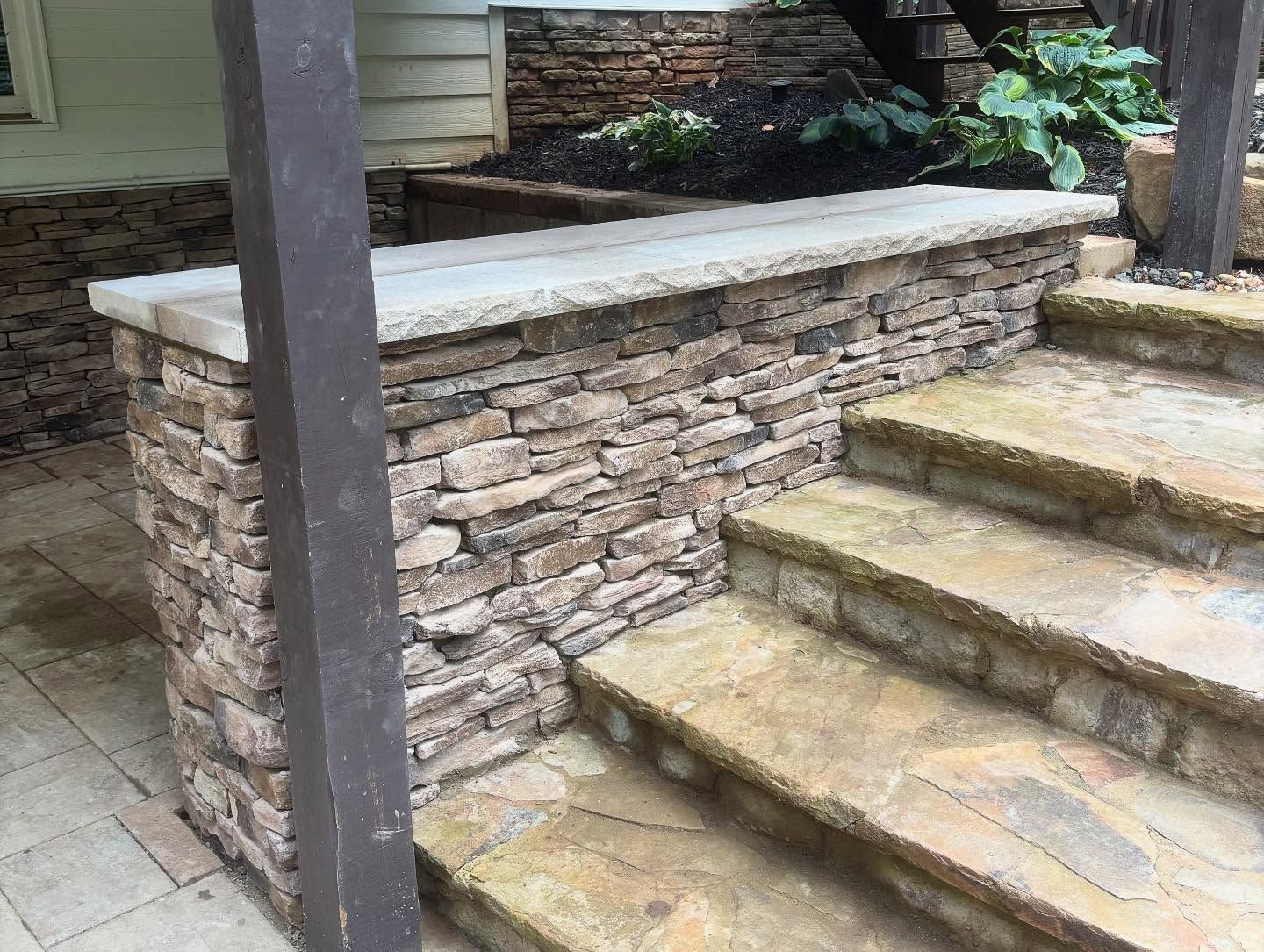
Stone Features That Add Structure and Detail
Masonry Stone Work in Canton for walls, decorative elements, and features requiring skilled craftsmanship and long-term durability
Custom stone work involves more than stacking materials—it requires understanding how different stones respond to weather, weight, and mortar adhesion to build features that remain stable and visually intact for decades. AC Hardscape & Designs delivers masonry stone work in Canton using both natural and manufactured stone materials, with detailed finishes that complement patios, fire features, and outdoor kitchens. Skilled craftsmanship ensures structural integrity and timeless design that holds up under Georgia's freeze-thaw cycles, summer heat, and seasonal moisture fluctuations.
Stone selection affects both appearance and performance, with natural stone offering unique color variation and texture while manufactured stone provides consistent sizing and often lighter weight for vertical applications. Mortar joints are tooled to shed water and prevent infiltration that would weaken the bond or cause freeze damage, and stone is laid with attention to weight distribution and interlocking patterns that resist shifting. Features range from functional retaining walls and sitting walls to decorative veneers, columns, and accent elements that add visual interest to outdoor living areas.
Schedule a custom masonry project consultation to discuss design options and material selections.
What Proper Masonry Stone Work Accomplishes
Construction begins with stable footing or base preparation appropriate to the structure being built, ensuring weight is supported evenly and settling is minimized. Stone is laid course by course with full mortar coverage that locks each piece into place, and joints are struck or raked to match design intent while maintaining water-shedding function. Capstones are set on walls and columns to protect underlying masonry from direct water infiltration, and edges are finished cleanly where stone meets other materials like pavers, siding, or wood.
Once complete, you see stonework with tight, consistent joints that remain intact through seasonal ground movement and temperature changes, and surfaces that resist staining, cracking, or mortar erosion over time. Stone features anchor outdoor spaces visually, providing texture and color contrast that enhances surrounding hardscape and landscaping. Retaining walls hold soil without bowing or leaning, decorative columns stand plumb and stable, and veneered surfaces remain securely attached without delamination or individual stone displacement.
Masonry work is customizable in stone type, color, pattern, and finish, allowing features to match existing architecture or create intentional design contrasts. Natural stone delivers organic variation, while manufactured options offer predictable color palettes and shapes suited to formal or contemporary designs. Stone work integrates with other hardscape elements, often wrapping fire pits, defining outdoor kitchen perimeters, or accenting entryways and garden walls to unify the overall landscape design.
Masonry stone work involves material choices, structural considerations, and long-term performance factors that affect both cost and durability.
What Property Owners Usually Ask
What is the difference between natural and manufactured stone?
Natural stone is quarried and cut from rock formations, offering unique color and texture variation, while manufactured stone is cast from molds using concrete and pigments, providing consistent sizing and often lighter weight that simplifies installation on vertical surfaces.
How are stone walls built to resist settling and cracking?
Walls are built on stable footings or compacted aggregate bases that distribute weight evenly, and stone is laid with full mortar joints that lock courses together and prevent individual stones from shifting as soil or temperature conditions change.
What maintenance does masonry stone work require?
Stone features require minimal maintenance beyond occasional cleaning to remove dirt or organic staining, and mortar joints should be inspected periodically for cracks or erosion, with repointing performed as needed to maintain water resistance and structural integrity.
When should stone work be added to an existing patio or outdoor living area?
Stone features can be added any time after base hardscape is complete, but planning them during initial design allows for integrated footing preparation, matching materials, and coordinated layout that ties all elements together visually and functionally in Canton landscapes.
How does stone selection affect the appearance and cost of a project?
Natural stone typically costs more due to quarrying and transportation but delivers unique aesthetics, while manufactured stone offers budget-friendly consistency and wider color ranges, and both perform well structurally when installed with proper technique and materials.
AC Hardscape & Designs builds custom masonry stone work for walls, decorative features, and functional elements that add structure and visual detail to outdoor spaces in Canton. Request a project estimate to explore stone options and design possibilities for your property.