
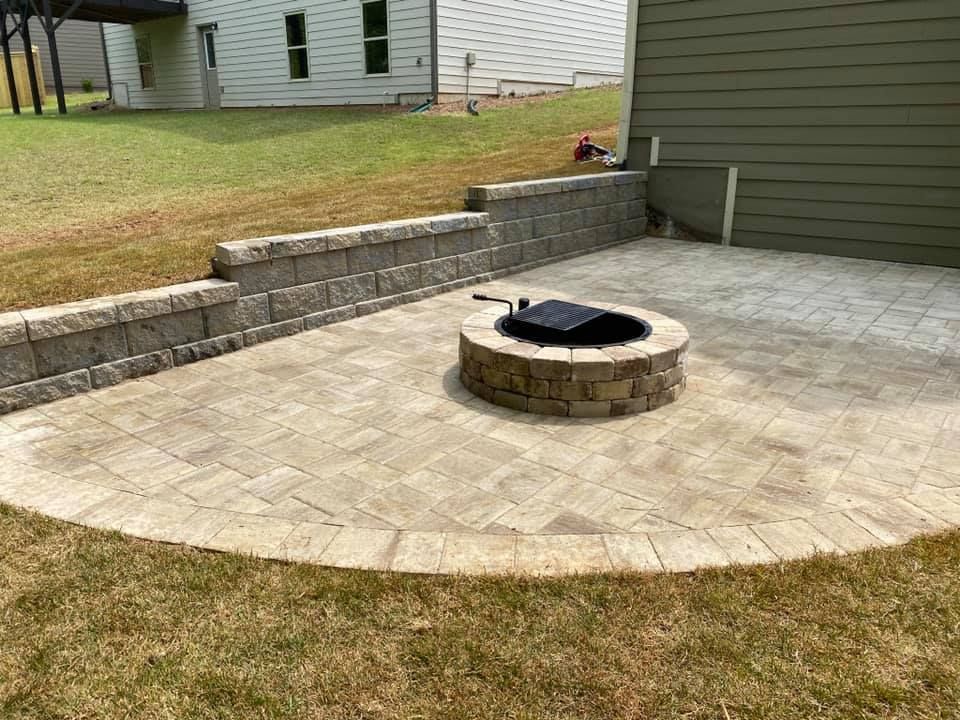
Patios Built Around the Fire Feature
Fire Pit Patios in Canton for outdoor spaces where the fire and surrounding surface need to function as one unified area
A fire pit installed on bare ground or an undersized pad limits how people use the space, forcing guests onto grass or gravel and creating a disconnected outdoor area. AC Hardscape & Designs integrates fire features with professionally designed patios in Canton, so the paver surface, fire pit placement, and seating zones work together from the start. The patio provides stable footing, defines the gathering area, and prevents the fire feature from looking like an afterthought dropped into the yard.
The design process determines patio size based on fire pit dimensions, planned seating capacity, and how the space connects to the home or other outdoor features. Paver selection affects both durability and appearance—concrete pavers handle high traffic and resist heat exposure, while natural stone options like flagstone or travertine offer texture variety and a more organic look. Proper base preparation ensures the patio remains level under Canton's clay soil movement, preventing the uneven surfaces that tilt furniture and create tripping hazards over time.
Arrange an on-site review to discuss patio dimensions, paver styles, and how the fire pit integrates with your home's outdoor access points.
Why the Patio Design Affects Fire Pit Usability
Integrated patio design accounts for heat exposure near the fire, drainage away from the pit area, and transition zones between the fire feature and surrounding landscape. The paver layout can incorporate contrasting borders, circular insets around the pit, or radiating patterns that visually anchor the fire as the central element. These design choices also influence maintenance—tight joints reduce weed growth, and permeable options improve water management on sloped properties.
You'll notice the difference when the entire space feels intentional rather than improvised. Furniture stays stable on the level surface, foot traffic no longer wears paths through grass, and the fire pit looks built-in rather than placed. The patio extends usable outdoor space beyond the immediate fire area, providing room for food prep tables, additional seating, or pathways that guide movement without crowding the fire itself.
The installation also includes edge restraints and proper grading to prevent paver shifting and ensure water drains away from the fire pit and seating zones, which matters on properties where runoff previously pooled near outdoor features..
Property owners often want to understand how patio size, material choice, and layout affect the finished space and long-term performance.
Common Questions About Fire Pit Patios
How large should the patio be relative to the fire pit?
The patio should extend at least four to five feet beyond the fire pit's perimeter to accommodate seating and movement, with larger areas needed if you plan built-in seating or dining space.
What paver materials work best near fire features?
Concrete pavers and natural stone withstand heat exposure without cracking or discoloring, while certain manufactured pavers may fade or weaken under prolonged direct heat from wood-burning pits.
Why does base preparation matter for fire pit patios?
Properly compacted base layers prevent settling and shifting under Canton's clay soil conditions, which is critical near fire features where uneven surfaces create safety hazards and affect drainage.
How do paver patterns affect the overall design?
Patterns like herringbone or circular layouts around the pit create visual interest and define zones within the patio, while running bond or stacked patterns offer simpler, more contemporary looks.
What happens if the patio isn't designed with the fire pit initially?
Retrofitting a fire pit onto an existing patio often requires cutting pavers, adding heat barriers, or expanding the surface area, which increases cost and may result in mismatched materials or visible repairs.
AC Hardscape & Designs plans fire pit patios to balance aesthetics, functionality, and site-specific conditions, ensuring the finished space supports how you'll actually use it. Contact us to review your property's layout, preferred paver options, and how the fire feature integrates into your broader outdoor living plans.