
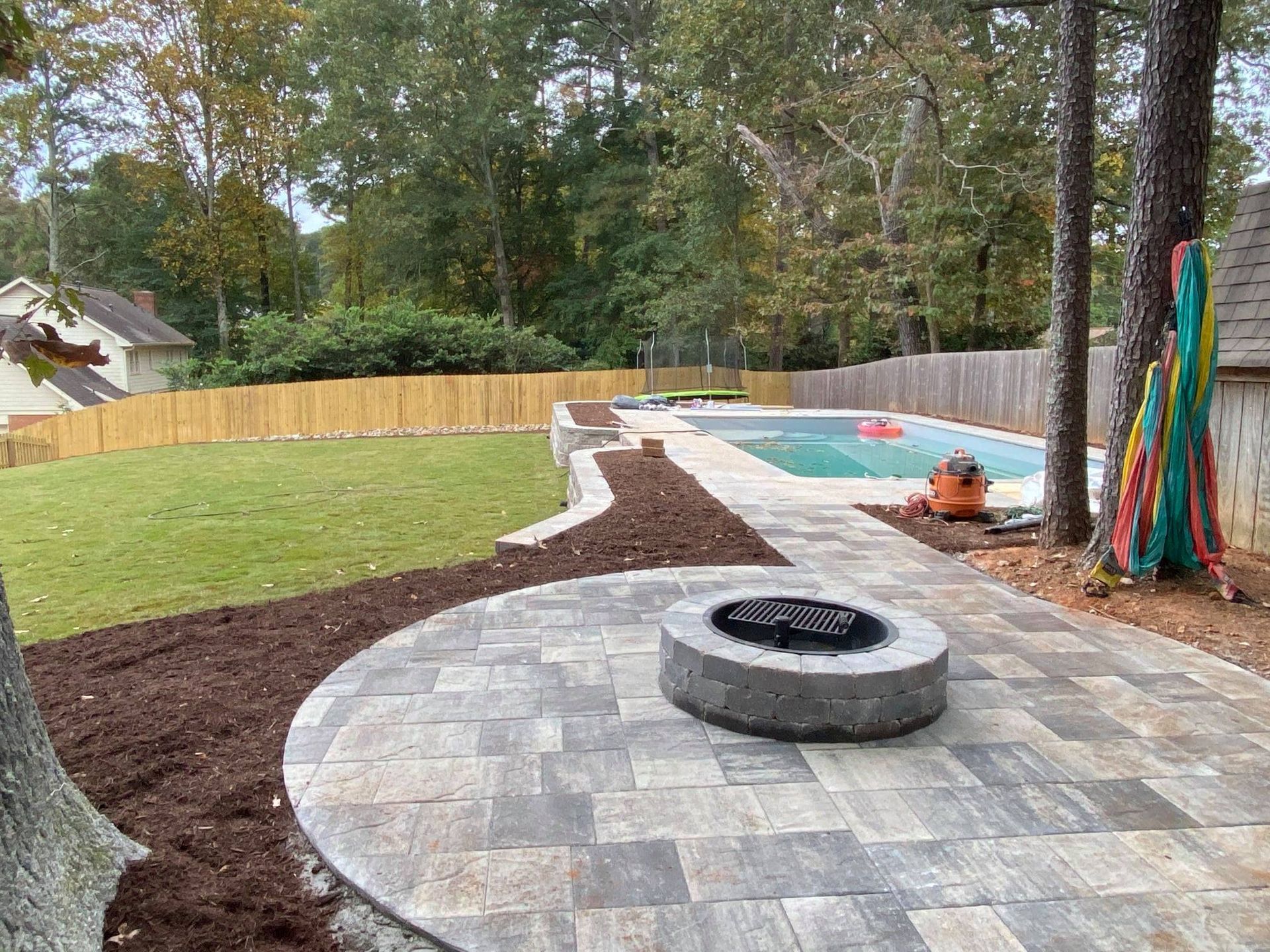
Fire Features That Burn Real Wood
Wood-Burning Fire Pits in Canton for properties where the crackling sound and natural fire experience matter
Gas fire pits ignite with a switch, but wood-burning fire pits provide the sensory experience many homeowners want—the smell of burning wood, visible flame movement, and the ritual of building and tending a fire. AC Hardscape & Designs installs wood-burning fire pits in Canton sized and positioned to fit available yard space while meeting safety clearances from structures, plants, and seating areas. The design affects how the fire draws air, how much heat radiates outward, and whether smoke drifts toward seating or disperses above the gathering area.
Custom sizing determines fire pit depth, diameter, and wall height based on how you plan to use the feature—larger pits accommodate longer burns and bigger logs, while smaller designs suit occasional use and tighter spaces. Material selection includes firebrick liners that withstand repeated heating and cooling cycles, stone or block exteriors that integrate with surrounding hardscape, and metal fire rings that contain embers and protect masonry from direct flame contact. Durable installation also requires proper drainage within the pit to prevent water accumulation that cracks materials during freeze-thaw cycles.
Request a property assessment to evaluate placement options, fire pit sizing, and material combinations that suit your outdoor layout.
What Wood-Burning Design Involves Structurally
The construction process includes excavating and leveling the base, installing drainage if the site holds water, building up the fire pit walls with heat-resistant materials, and ensuring the structure sits stable without shifting or cracking. Wall design affects air intake—gaps or vents near the base improve combustion and reduce smoke, which matters when wind patterns or seating arrangements make smoke drift an issue. The finish can range from natural stacked stone to mortared brick or smooth stucco depending on the desired aesthetic and existing landscape materials.
After the fire pit is complete, you'll notice how the structure radiates heat evenly and contains embers without sparks escaping onto surrounding surfaces. Wood-burning fire pits require ongoing ash removal and occasional inspection of the liner and joints, but they deliver the traditional fire experience that gas alternatives can't replicate. The installation also creates a permanent outdoor focal point that defines gathering areas and adds functionality beyond simple decoration.
The design also considers wood storage proximity, seating placement relative to prevailing winds, and clearance from overhanging branches or structures to reduce fire hazards and simplify ongoing use.
Questions about wood-burning fire pits typically focus on materials, maintenance requirements, and how the design affects usability and safety.
What Homeowners Ask About Wood-Burning Pits
What materials handle repeated wood burning best?
Firebrick liners withstand high heat without cracking, while natural stone or concrete block exteriors provide structural support and integrate with landscape design, and metal fire rings protect masonry from direct flame damage.
How does fire pit size affect performance?
Larger diameter pits burn longer and accommodate bigger logs, but they also require more fuel and produce more heat, which can overwhelm small seating areas or tight yards in Canton.
Why does air flow matter in wood-burning pits?
Proper air intake through vents or gaps near the base improves combustion efficiency, reduces smoke production, and helps the fire burn hotter and cleaner, which affects both performance and guest comfort.
What maintenance does a wood-burning pit require?
You'll need to remove ash buildup periodically, inspect the liner and joints for cracks caused by heat cycling, and clear debris that accumulates during non-use to maintain proper drainage.
How far should the fire pit sit from seating and structures?
Most codes require at least ten feet from structures and overhead obstructions, with seating positioned five to seven feet from the pit's edge to balance warmth and smoke avoidance depending on typical wind direction.
AC Hardscape & Designs builds wood-burning fire pits that balance traditional fire experience with practical design considerations, ensuring the feature performs well and integrates cleanly into your outdoor space. Schedule a consultation to discuss site-specific placement, size options, and material choices that fit your property and how you plan to use the fire pit.